
- 20/04/2026
- sitadmin
- 0 Comments
- Networking, Uncategorized
Giving Back to SIT: Shaping the Next Generation with Assistant Professor Mauricette Lee
What does it mean to give back to SIT? For many alumni, it is not just about donations, but about investing time, knowledge, and care into the next generation. This new series shines a light on SITizens who are doing exactly that in their own ways. We begin with Assistant Professor Mauricette Lee, who has come full circle from student to educator, and is now shaping future healthcare professionals.
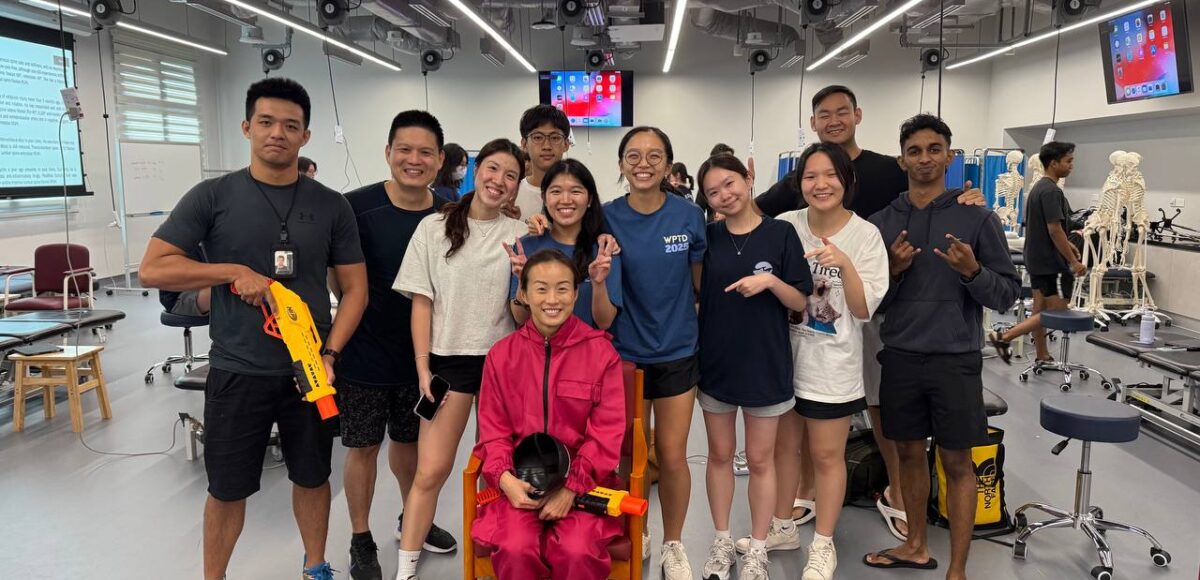
For many alumni, returning to campus brings a sense of nostalgia. Familiar lecture halls, shared memories, and the unmistakable “SITizen” spirit all come rushing back. For Assistant Professor Mauricette Lee, however, coming back to the Singapore Institute of Technology (SIT) means stepping into a very different role. She has moved from student to educator, and from learner to mentor.
“It’s surreal,” she reflects. “I now have the privilege and responsibility of shaping the next generation of healthcare professionals.”
That sense of responsibility is something she carries deeply. Teaching, for her, goes beyond delivering content. It is about ensuring that every lesson is meaningful, accurate, and ethically grounded. “Knowing that my teaching has a direct impact on how students will eventually serve patients and communities keeps me constantly reflective,” she says. “It pushes me to always do my best.”
The SITizen Spirit, Then and Now
Having experienced SIT both as a student and now as faculty, Prof Mauricette has a unique perspective on how the university has evolved. Yet, at its core, she believes the SITizen spirit remains unchanged.
“The emphasis on community engagement, collaboration, and adaptability is still very much there,” she shares. Today, this spirit shows up in her work through close partnerships with healthcare providers and community stakeholders, from clinical environments to programmes that promote active living.
What has changed is the pace of transformation. With rapid developments in education and healthcare, including the rise of new technologies, there is a growing need to rethink how learning is delivered. “We have to keep asking ourselves how to make education relevant and impactful,” she says. “But the underlying mission of contributing meaningfully to society remains the same.”
Balancing Empathy and Expectations
As an SIT alumna, Prof Mauricette understands the rigour and demands students face, but she is careful not to assume too much.
“I wouldn’t say I know exactly what students are going through,” she admits, noting how much the learning environment has changed over time. Still, her experience gives her a valuable perspective, one that helps her approach students with empathy while maintaining fairness.
“I remind myself to pause and listen before judging,” she explains. “It’s about balancing understanding with accountability.”
It is a mindset that reflects her broader philosophy as an educator, supporting students not just academically, but as individuals navigating an increasingly complex world.
Coming Full Circle
With opportunities available in both academia and industry, returning to SIT was a deliberate choice.
“What drew me back is SIT’s identity as an applied learning university,” she says. The strong integration between education and industry allows her to stay connected to real-world practice, something she considers essential. “I intend to continue engaging in clinical work so I can truly ‘teach what I preach’ and remain grounded.”
This close connection between classroom learning, industry collaboration, and community impact is what makes SIT distinct, and what makes her role especially meaningful.
Redefining “Giving Back”
While this series explores the idea of alumni giving back, Prof Mauricette offers a thoughtful reframing of the concept.
“I don’t really see teaching as ‘giving back’ in the traditional sense,” she says. “It’s an ongoing contribution.”
For her, the relationship between educator and student is not one-directional. It is a continuous exchange of knowledge, perspectives, and growth. “While I share my experiences, I am also constantly learning,” she adds. “Being part of SIT opens up new opportunities to collaborate and gain fresh insights.”
In that sense, teaching becomes more than a profession. It becomes a long-term investment in people, in communities, and in the future of the profession itself.
“It’s not just about passing on knowledge,” she reflects. “It’s about growing together with students, with industry, and with the community, and collectively strengthening the SIT alumni legacy over time.”














Leave a Comment